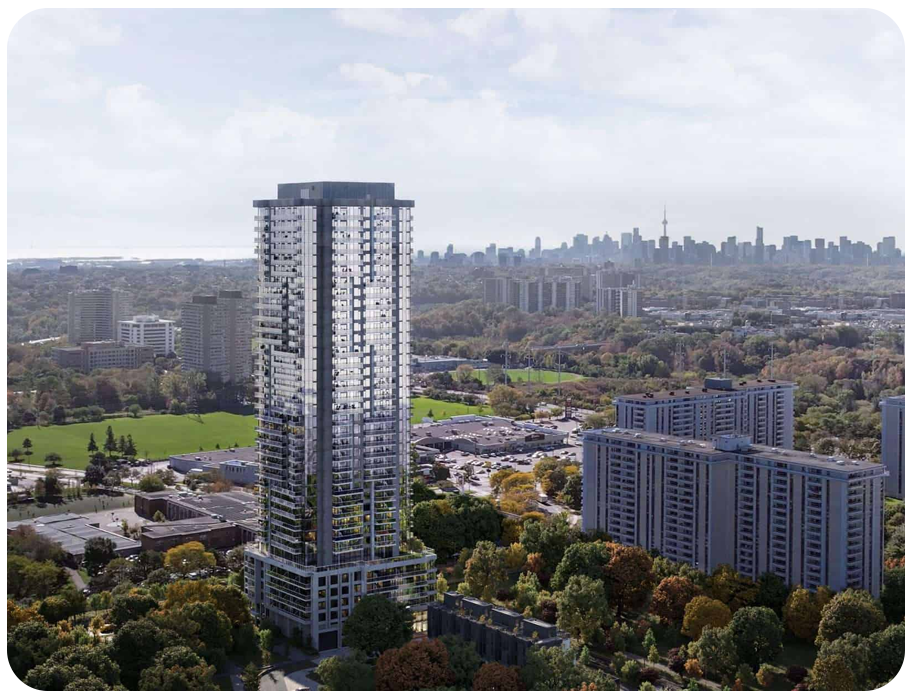
North York market overview before you search
The listings below are useful, but they make more sense when they are read with local context. Use this guide to compare neighbourhood quality, commute patterns, pricing behaviour, investor demand, and lifestyle fit before opening individual MLS or database properties.
Market overview
North York is an important real estate market for buyers who want more than a simple list of homes. The area is part of north Toronto and is best understood through lifestyle, commute, housing type, rental demand, and long-term resale strength. It is known as a major Toronto submarket with subway nodes, established neighbourhoods, and growing condo corridors, which means buyers should compare neighbourhoods carefully instead of judging the whole city by one average price. A condo beside transit, a family home near schools, and an investment property with income potential can behave very differently in the same city. A useful search starts by separating lifestyle fit from financial fit: where will the buyer commute, what monthly payment is comfortable, what property type has the best resale audience, and what trade-offs are acceptable?
Local market stats to review
Before making a decision in North York, review market statistics at the neighbourhood and property-type level rather than relying on a single city average. The most useful numbers are recent sold prices, active inventory, days on market, sale-to-list ratio, price per square foot for condos, average rent for comparable units, and the difference between freehold and condo demand. These numbers change throughout the year, so they should be checked close to the offer date. A buyer comparing condos, townhomes, detached homes, bungalows, and redevelopment opportunities should also look at how many similar listings are available, whether those homes are reducing price, and whether the best properties are still selling quickly. The goal is not to chase one headline statistic; it is to understand whether the specific home is priced fairly for its location, condition, parking, layout, and monthly cost.
Pricing trends
Current pricing in North York depends on inventory, condition, location, and property style. In this market, condo pricing is most active near Yonge Street, Sheppard, Finch, Don Mills, and Yorkdale, while detached homes depend heavily on lot size and school zones. Buyers should look at recent comparable sales, days on market, maintenance fees, lot size, parking, and future supply before making a decision. Sellers and investors should also watch how quickly similar homes are selling because a neighbourhood with fewer active listings can still attract strong interest even when the broader market feels slower. Price trends should be read beside affordability. A lower price can still be expensive if taxes, condo fees, maintenance, insurance, utilities, or repairs are high. A higher price can sometimes be justified when the property has stronger transit access, better schools, a more flexible floor plan, or a location that appeals to both end users and tenants.
Schools and education planning
Schools can materially influence buyer demand in North York, especially for families comparing detached homes, townhomes, and larger condos. Buyers should confirm current school boundaries with the relevant public, Catholic, French immersion, and private school options because boundaries and program availability can change. In many neighbourhoods, school reputation affects not only lifestyle but also resale depth: a home that works for families may attract a wider pool of future buyers. Education planning should also include childcare, after-school programs, libraries, recreation centres, sports facilities, and safe walking routes. For investors, proximity to schools can help with family tenant demand, while proximity to colleges, universities, hospitals, or employment campuses may support a different rental profile. The right education fit depends on the buyer, not simply on a city-wide ranking.
Transportation and commute
Transportation is one of the biggest drivers of demand in North York. Buyers often compare homes around Line 1 subway service, Highway 401, Allen Road, Don Valley Parkway access, and several TTC and GO bus connections. Easy access to transit, highways, schools, shopping, and employment areas can protect resale value and make the property easier to rent. A home that saves a commuter time every day may command a premium, while a lower-priced home farther from transit may still work for buyers who need more space or parking. Commute planning should include rush-hour driving, winter travel, weekend errands, parking availability, transit frequency, and whether the route is realistic without a car. Investors should also consider whether a tenant can reach jobs, groceries, schools, and daily services conveniently. Transit access is strongest when it supports everyday living today, not only when it depends on a future project.
Neighbourhood guide
Popular areas in North York include Yonge and Sheppard, Bayview Village, Downsview, York Mills, Don Mills, Willowdale, and Bathurst Manor, but each pocket should be reviewed on its own. A neighbourhood can feel different from one street to the next depending on traffic, parks, retail, schools, building age, lot sizes, rental concentration, and future development. Buyers should walk or drive the area at different times of day and compare noise, parking, safety, sunlight, nearby construction, and access to daily services. Condo buyers should compare building reputation, reserve fund health, amenities, elevators, visitor parking, pet rules, and short-term rental rules. Freehold buyers should compare roof age, basement condition, drainage, renovations, zoning, and future repair needs. A strong neighbourhood is not only attractive today; it should also have a clear reason future buyers or tenants will continue to want it.
Demographics and lifestyle
The buyer profile in North York includes families, professionals, students, medical workers, and newcomers who value schools, shopping, parks, and transit. That creates demand for different housing types at the same time. Some buyers want walkability and newer condos, while others want larger homes, yards, finished basements, or access to parks. When comparing listings, it is useful to look beyond the asking price and review schools, commute time, building age, monthly costs, rental rules, and neighbourhood growth plans. Lifestyle fit should be practical: groceries, healthcare, parks, gyms, restaurants, daycare, transit, worship centres, and family support can matter as much as bedroom count. For downsizers, elevator access, parking, storage, and low-maintenance living may matter most. For first-time buyers, predictable monthly cost and resale flexibility may be more important than buying the largest possible home.
Rental demand and tenant profile
North York can be useful for investors because of strong tenant demand from transit users, office workers, students, and families who want Toronto access without living downtown. Rental demand should be reviewed by tenant type. Some areas attract families who want schools and space, while others attract students, professionals, commuters, healthcare workers, airport workers, technology workers, or downsizers. The best rental properties usually solve a specific tenant problem: shorter commute, better space, parking, laundry, transit, school access, or predictable monthly cost. Investors should compare realistic rent against mortgage payment, condo fees, property tax, insurance, repairs, vacancy, management, and utilities. They should also confirm local rental rules, condo bylaws, basement apartment requirements, and short-term rental restrictions where applicable. A property with strong rent but difficult maintenance can still become a weak investment.
Investment outlook
The long-term investment outlook in North York depends on land supply, employment access, infrastructure, population growth, housing type, and affordability. The strongest opportunities are usually not just the cheapest homes. Good investment choices combine realistic rent, manageable carrying costs, durable tenant demand, and a clear exit strategy. Pre-construction buyers should review deposit structure, occupancy timing, assignment rules, development charges, HST implications, and closing costs. Resale investors should review inspection concerns, rental licensing, condo rules, capital repairs, and future competition. A strong investment should make sense under conservative assumptions. If the numbers only work with perfect rent, no vacancy, low rates, and rapid appreciation, the risk may be too high. The better approach is to compare several scenarios before committing.
Buyer strategy
A buyer searching in North York should start with a clear budget, preferred commute, required bedrooms, parking needs, and monthly carrying cost. Common property searches include condos, townhomes, detached homes, bungalows, and redevelopment opportunities, but the right property depends on the goal. A first-time buyer may prioritize affordability and resale flexibility. A family may prioritize schools, space, and neighbourhood stability. An investor may prioritize rentability and future exit value. A downsizer may prioritize convenience, elevator access, and lower maintenance. Before offering, buyers should review comparable sales, seller motivation, inspection risk, offer conditions, closing date, deposit size, and whether competing buyers are active. The best offer is not always the highest price; it is the offer that fits the property, the market pressure, and the buyer's risk tolerance.
Risks to watch
Every real estate market has risks, and North York is no exception. Buyers should watch for overpaying based on emotion, ignoring repair costs, underestimating condo fees, relying on outdated comparable sales, or assuming future transit and development will arrive exactly as planned. Investors should be careful with optimistic rent projections, weak cash flow, tenant turnover, special assessments, restrictive bylaws, and properties that appeal to a very narrow resale audience. Pre-construction buyers should read assignment rules, occupancy fees, closing adjustments, deposit timing, and builder history. Freehold buyers should pay attention to roof, windows, grading, basement moisture, electrical, plumbing, HVAC, and renovation permits. A careful review before purchase can prevent expensive surprises after closing.
What to search for
Common property searches in North York include condos, townhomes, detached homes, bungalows, and redevelopment opportunities. If you are buying, start with a clear budget, preferred commute, required bedrooms, and monthly carrying cost. If you are investing, compare rent potential, vacancy risk, building condition, property tax, condo fees, and future supply. Loyalty Real Estate can help you compare live MLS listings, database opportunities, and pre-construction options so you can narrow the search with better context. The most useful search is specific: instead of only asking for homes in North York, compare the property type, neighbourhood, commute, schools, monthly cost, and exit strategy together. That is how buyers avoid thin comparisons and make decisions that can hold up after the excitement of the first showing fades.